Remembering and Reclaiming Día de Reyes
For many of us, Día de Reyes lives in fragments. A memory of shoes by the door. The smell of sweet bread. A story we half-remember but still feel in our bones. Even if time, distance, or migration pulled us away from the details, the tradition has a way of calling us back. Reclaiming Día de Reyes is not just about honoring a holiday—it’s about reconnecting with cultural identity, lineage, and belonging. And for those drawn to heritage travel, it can also become a powerful reason to experience this celebration in the places where it has been kept alive for generations.
The History and Meaning of Día de Reyes
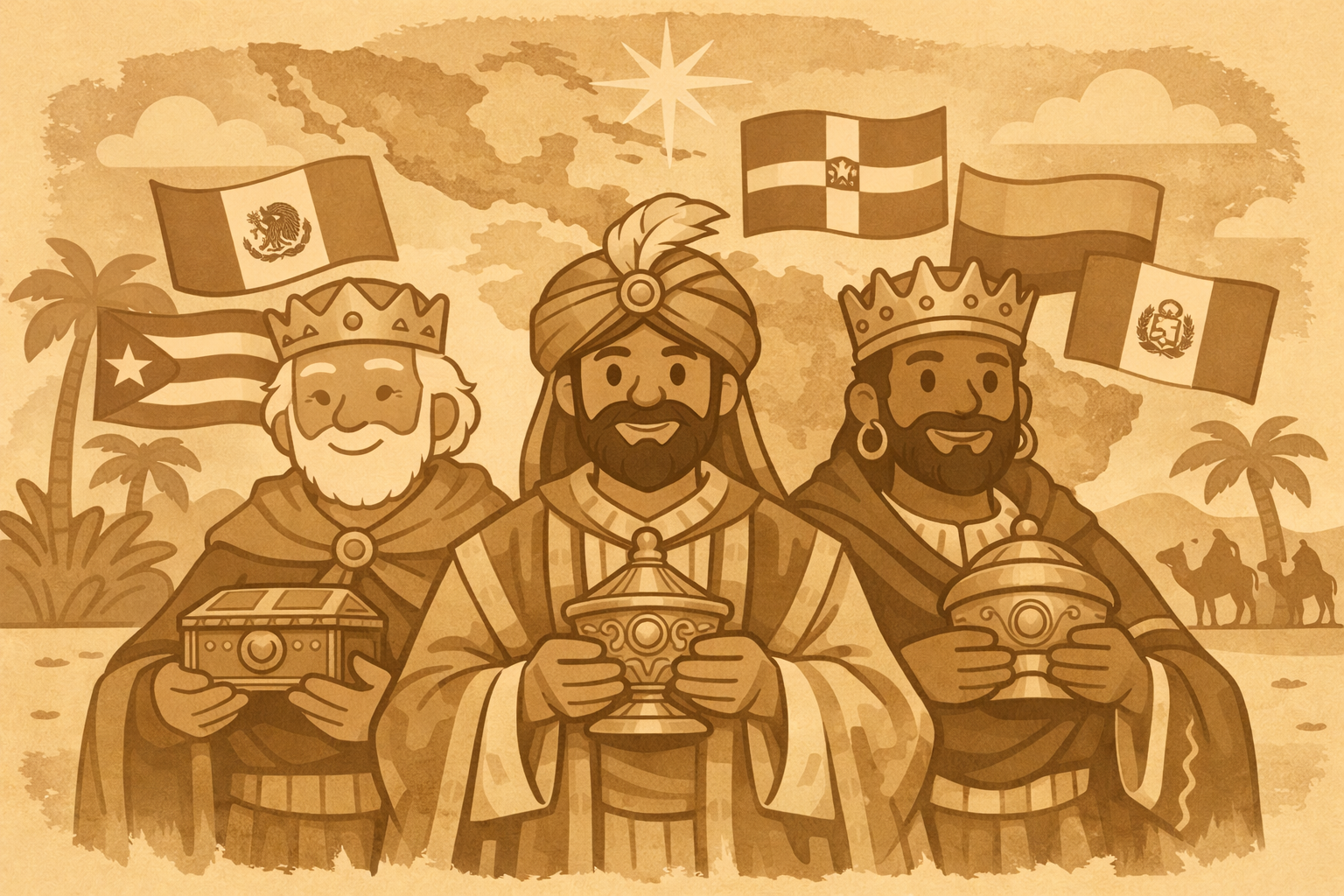
Día de Reyes, also known as Three Kings Day or Epiphany, is celebrated on January 6 and commemorates the biblical story of Los Tres Reyes Magos: Melchor, Gaspar, and Baltasar. According to Christian tradition, the Three Kings followed a guiding star to Bethlehem, bringing gifts of gold, frankincense, and myrrh to the newborn Jesus.
In many Latin American cultures, Día de Reyes—rather than Christmas Day—is the moment when gifts are exchanged, especially for children. The holiday emphasizes faith, journey, generosity, and devotion. As the tradition spread through Spanish colonization, it blended with Indigenous worldviews and African spiritual practices, transforming Día de Reyes into a uniquely local celebration across Latin America and the Caribbean.
Día de Reyes in Mexico
In Mexico, Día de Reyes is marked by the sharing of Rosca de Reyes, a circular sweet bread decorated with dried fruit to symbolize royal crowns. A small figurine of baby Jesús is hidden inside, and whoever finds it commits to hosting a communal gathering on Día de la Candelaria in February. This practice reflects Indigenous traditions of shared responsibility, reciprocity, and community-centered celebration.
CDMX
Mexico City hosts one of the largest Día de Reyes celebrations in the country. The Zócalo and Paseo de la Reforma come alive with massive Rosca de Reyes distributions, cultural performances, and family-friendly events. Bakeries across the city prepare oversized roscas meant to be shared communally.
Oaxaca City
In Oaxaca, Día de Reyes blends Catholic tradition with Indigenous Zapotec culture. Families gather in plazas, and the celebration often includes music, local sweets, and religious observances tied to community life.
Día de Reyes in Puerto Rico
Puerto Rican children traditionally leave grass or hay in a shoebox under their beds for the camels of the Three Kings. In return, they receive gifts. This ritual mirrors Afro-Caribbean and Taíno practices of offering, exchange, and respect for spiritual forces, reinforcing the idea that abundance flows through reciprocity.
Juana Díaz
Known as La Ciudad de los Reyes, Juana Díaz hosts Puerto Rico’s most famous Día de Reyes celebration. The annual Three Kings Festival features a large parade, live music, artisan markets, and appearances by the Three Kings themselves. This is the most immersive place on the island to experience the tradition.
San Juan
In Old San Juan, churches and cultural centers host family events, storytelling, and gift-giving celebrations rooted in both Catholic and Afro-Caribbean traditions.
Día de Reyes in Dominican Republic
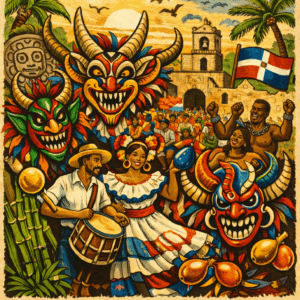
In the Dominican Republic, Día de Reyes has historically been one of the most important holidays for children. Families gathered, gifts were exchanged, and the celebration carried a strong communal spirit. Afro-Dominican music, storytelling, and oral tradition helped root the biblical story in collective memory and joy.
Santo Domingo
In the capital, Día de Reyes is celebrated through church services, community gatherings, and neighborhood-based events. The Colonial Zone often hosts cultural programming, while families come together for shared meals and children’s celebrations.
Santiago de los Caballeros
Santiago is known for its strong community traditions, where Día de Reyes is celebrated with music, local sweets, and family-centered festivities that reflect Afro-Dominican cultural heritage.
Día de Reyes in Colombia
In Colombia, Día de Reyes celebrations vary by region. While gift-giving is common, the day also emphasizes reflection, gratitude, and family gatherings. In rural and Indigenous communities, the holiday aligns with agricultural cycles and seasonal rhythms, connecting spiritual celebration to the land.
Bogotá
In Bogotá, Día de Reyes celebrations often take place in cultural centers, churches, and public spaces. While more subdued than in the Caribbean, the day emphasizes reflection, gratitude, and family gatherings—especially in historic neighborhoods.
Popayán
Known for its religious traditions, Popayán marks Día de Reyes with ceremonies tied to Colombia’s broader Epiphany observances, blending Catholic ritual with local customs.
Día de Reyes in Peru
In Peru, Día de Reyes often coincides with the Bajada de Reyes in Cusco, when nativity scenes are ceremonially taken down. This moment of closure blends Catholic symbolism with Andean traditions that honor Pachamama, or Mother Earth, reinforcing themes of renewal, balance, and respect for nature.
Ayacucho
Ayacucho hosts processions, music, and religious observances tied to Epiphany, blending Indigenous Andean symbolism with Spanish colonial influences.
Indigenous and African Roots Within Día de Reyes
While Día de Reyes is rooted in Christian theology, its endurance across Latin America is due in large part to Indigenous and African influences. Practices such as communal feasting, offerings, music, dance, and cyclical rituals reflect belief systems that predate colonization. These layers transformed the holiday into a living tradition, one that speaks not only to faith, but to survival, adaptation, and cultural continuity.
How to Keep Día de Reyes Traditions Alive – At Home or Through Travel
Many Día de Reyes celebrations are community-based rather than tourist-driven, which is exactly what makes them meaningful. Traveling during this time invites you to participate respectfully: sharing food, listening to stories, and observing rituals that have been carried forward through generations.
You don’t need to be in Latin America to honor Día de Reyes, but travel can deepen the experience. Whether at home or abroad, keeping the tradition alive can look like:
-
Sharing a Rosca de Reyes with friends or family
-
Telling the story of the Three Kings across generations
-
Creating a small altar, nativity, or offering rooted in your heritage
-
Asking elders how Día de Reyes was celebrated in your family
-
Planning future travel around January 6 to experience the holiday in your country of origin
For many travelers, heritage travel becomes a way to transform memory into lived experience. Día de Reyes offers a meaningful opportunity to reconnect—not just with a destination, but with yourself.