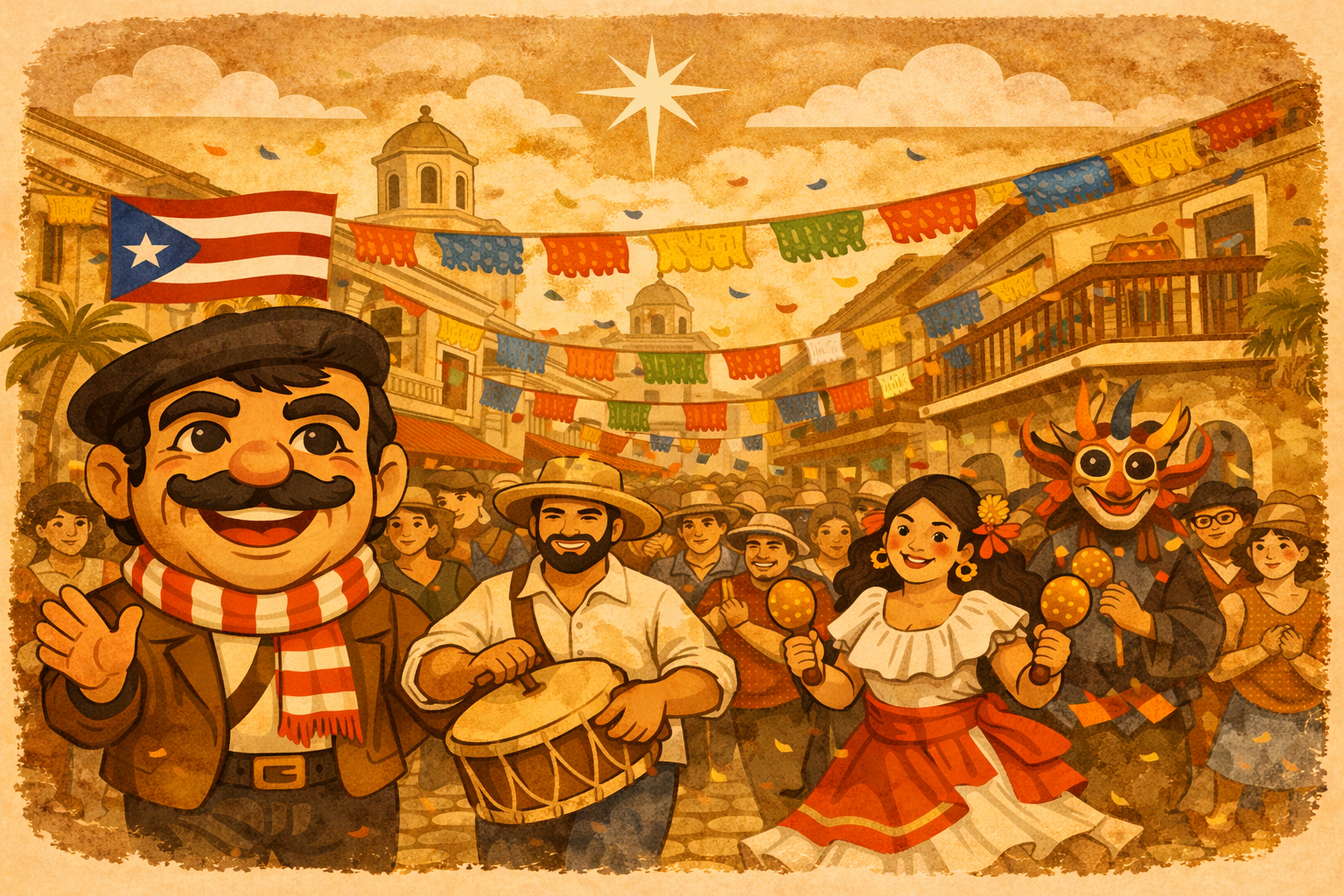
Where and When: Old San Juan, January
What the Holiday or Tradition Is and Why It Matters
The Fiestas de la Calle San Sebastián is the largest cultural festival in Puerto Rico and one of the most significant public traditions on the island. Held every January in Old San Juan, the celebration honors Saint Sebastian while also marking the symbolic closing of Puerto Rico’s extended Christmas season, which is the longest Christmas season in the world.
For Puerto Ricans, SanSe is not simply a festival or tourist attraction. It is a communal tradition rooted in faith, music, neighborhood life, and cultural continuity. Families return year after year, artisans rely on the weekend for income, and musicians carry forward rhythms that belong to the island’s collective memory. The streets of Old San Juan become a shared cultural space shaped by the people who live and create there.
While visitors are welcome, the meaning of SanSe is grounded in community life rather than spectacle. The celebration reflects how culture is lived publicly through sound, movement, and social connection.
Roots: Indigenous, African, and Ancestral Lineages
The origins of the Fiestas de la Calle San Sebastián are tied to Catholic feast days introduced during Spanish colonial rule, when religious observances structured public life. Over generations, Puerto Rican communities reshaped these traditions, blending European religious practices with African diasporic rhythms and Caribbean forms of celebration.
A key period in the festival’s history occurred in the mid-twentieth century, when residents and clergy in Old San Juan revived the celebration as a parish fundraiser connected to local churches. By the 1970s, neighborhood leaders, artists, and cultural workers transformed SanSe into a grassroots cultural event centered on community participation.
Elements such as cabezudos, which are oversized papier-mâché figures, street parades, plena and bomba music, and call-and-response singing reflect African and Afro-Caribbean performance traditions. These practices emphasize collective movement, rhythm, and storytelling. Rather than remaining static, SanSe continues to evolve as each generation adapts the celebration to contemporary life while maintaining its cultural roots.
How to Experience This Respectfully: A Heritage Travel Lens
SanSe includes both religious observances and public street celebrations. Visitors may encounter church services, processions, live music, dancing, and artisan markets throughout Old San Juan.
Religious moments such as blessings or processions should be approached with quiet attention and respect. These are devotional practices rather than performances. Street celebrations invite participation, but it is important to follow local cues and allow residents to set the tone.
Photography is common in public spaces, but visitors should ask permission before photographing individuals, especially performers, elders, or moments of prayer. Traditional costumes, masks, and musical expressions should not be treated as props or novelty items.
Giving back during SanSe should prioritize reciprocity rather than charity. Visitors can support Puerto Rican artisans by purchasing directly from vendor stalls, support musicians by stopping to listen rather than passing through, and choose locally owned accommodations and restaurants. Cultural engagement is most respectful when it contributes economically and socially to the communities sustaining the tradition.
Learn More: Books, Media, and Cultural Resources
- Subiendo y Bajando: La Historia de las Fiestas de la Calle San Sebastián
Instituto de Cultura Puertorriqueña. Documentary.
This documentary traces the evolution of the festival through interviews with residents, artists, and historians who have shaped SanSe over decades. - La historia de las Fiestas de la Calle San Sebastián
Metro Puerto Rico. Article.
An accessible historical overview that explains the religious roots of the celebration and the role of Old San Juan residents in preserving it.
These resources provide essential context for understanding the Afro-Puerto Rican musical traditions central to SanSe.
Practical Notes for Planning a Trip Around SanSe
The Fiestas de la Calle San Sebastián takes place during the third weekend of January, typically from Thursday through Sunday. Events begin during the day and continue late into the night.
Old San Juan becomes extremely crowded, especially on Friday through Sunday. Many streets are closed to vehicles, and walking is the primary way to move through the area. Visitors should plan transportation and lodging well in advance.
The historic streets of Old San Juan are paved with uneven cobblestones, which can be slippery. Comfortable footwear is essential. Music, crowds, and heat can be intense, so pacing and rest are important, especially for children and older travelers.
Booking locally owned guesthouses and planning meals at neighborhood restaurants helps ensure that tourism supports the local economy during the festival.
Closing Reflection
The Fiestas de la Calle San Sebastián endures because it is held by the community, not staged for an audience. It reflects how Puerto Rican culture lives in public spaces through music, faith, humor, and collective presence. Approaching SanSe with care, curiosity, and respect allows visitors to witness not just a celebration, but a living tradition.
Journal Prompt: How might your presence during SanSe support continuity rather than consumption—and what traditions in your own community deserve that same care?