What the Holiday Is & Why It Matters
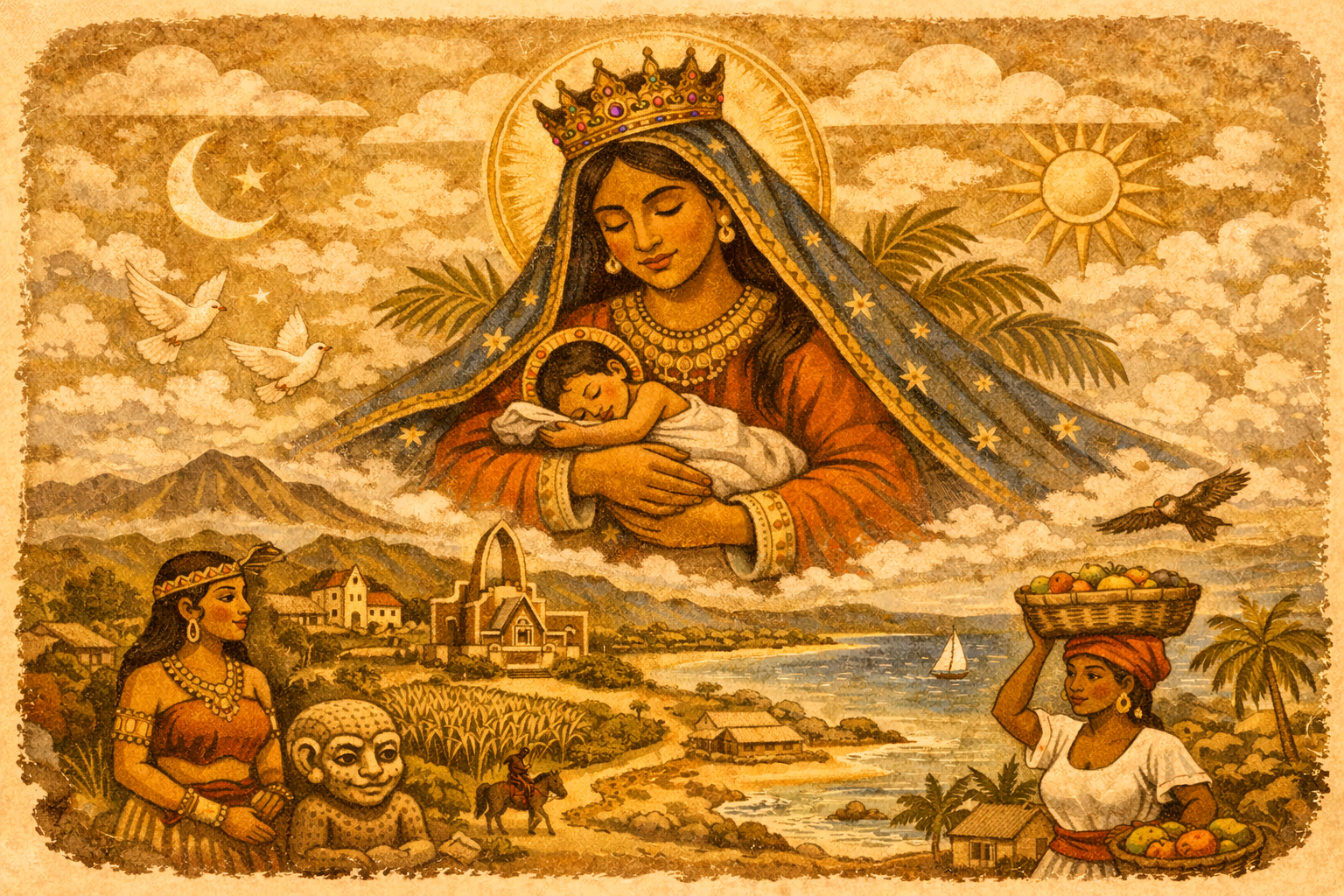
Each year on January 21, communities across the Dominican Republic honor Nuestra Señora de la Altagracia, the country’s patroness and one of its most enduring spiritual figures. Known simply as La Virgen, she is widely understood as a guardian of families, mothers, and children, and as a source of protection during times of uncertainty.
The center of the observance is the city of Higüey, where pilgrims travel from across the island to pray at the basilica dedicated in her name. Churches hold special masses, families create home altars, and daily life slows to make room for devotion.
This is not a spectacle or a cultural showcase. It is a religious holiday shaped by faith, obligation, and continuity, carried forward through generations as part of everyday Dominican spiritual life.
Roots: Indigenous, African, and Ancestral Lineages
Devotion to the Virgen de la Altagracia took shape during the early colonial period, but its survival and meaning cannot be understood without acknowledging the Indigenous and African foundations of Dominican culture.
Taíno communities held spiritual relationships with the land, fertility, and ancestral presence, expressed through zemíes rather than saint-like figures. These worldviews emphasized protection, continuity, and balance, values that later found space within Catholic devotion without being replaced or erased.
African-descended populations, brought to the island through enslavement, carried traditions that honored maternal protection, spiritual intercession, and communal ritual. Over time, Dominican religious life reflected a convergence of these ways of understanding the sacred, even when expressed through Catholic forms.
Rather than representing a direct substitution of deities, devotion to the Virgen de la Altagracia reflects adaptation and continuity. Communities shaped inherited Catholic practices through Indigenous and African sensibilities, creating a faith that responded to lived realities under colonial rule and beyond.
How to Experience This Respectfully (Heritage Travel Lens)
If you are present during January 21, your role is to observe with care and humility.
Masses and processions are acts of prayer, not performances. Modest clothing, quiet attention, and patience are expected. Photography may be limited, especially inside churches or during moments of prayer, and should only be taken when clearly permitted.
Participation is appropriate only when it follows local guidance. Standing alongside worshippers, lighting a candle, or listening in silence is different from inserting yourself into ritual spaces meant for community members.
Reciprocity matters. Support local vendors selling candles, flowers, or devotional items without bargaining. If you hire a guide, choose someone based in Higüey who understands the religious meaning of the day. Avoid seeking exclusive access or framing the experience as personal discovery.
Respect here means allowing the day to belong to the people who hold it.
Learn More: Books, Media, and Cultural Resources
- Historia de La Virgen de La Altagracia – Video
- Nuestra Señora de la Altagracia: Historia y Devoción Dominicana
Various Dominican historians
Book
A Spanish-language overview grounded in Dominican scholarship that traces the Virgin’s role in national and religious life. - Basílica Nuestra Señora de la Altagracia Museo
Museum
Houses devotional objects, historical records, and community offerings that reflect lived religious practice rather than touristic narrative. - Centro León, Santiago
Cultural institution
Exhibitions and publications focused on Dominican history, Afro-Caribbean spirituality, and cultural continuity
Note: English-language academic sources on this devotion are limited. Spanish-language and community-based materials remain the most faithful.
Practical Notes for Planning a Trip Around This Tradition
January 21 is the central day of observance, with services beginning early in the morning. Higüey becomes very crowded, and accommodations fill quickly.
Expect long periods of standing and limited seating during masses. Some streets close for processions, so walking is often necessary. Book lodging in advance and prioritize locally owned guesthouses and transport providers.
Plan with flexibility. The pace and flow of the day are set by the community and the religious calendar, not by visitor schedules.