You’re probably reading this because a trip is coming up and your stomach already hurts. You’ve pictured the meltdown at the gate. The stares. The seat kicking. You’ve maybe even wondered if you should cancel.
I hear you. I’ve lived it. And I’m going to tell you something most travel blogs won’t: preparing your kids for travel starts with preparing yourself. Your child doesn’t have their own nervous system figured out yet. They borrow yours.
Let me explain how I learned that the hard way.
The Flight That Broke Me
When my daughter was a year and a half, I flew with her to the Dominican Republic. Just the two of us.
She screamed the entire trip. She was walking by then, so she wouldn’t stay put either. Screaming and squirming, for hours.
Here’s what I didn’t see at the time. I have flying anxiety. I had been dreading that solo flight for weeks. I booked a very early flight and barely slept the night before. I got into an argument with my husband that morning and boarded the plane furious. We were in first class, and the people around us were not kind about it.
By the time we landed, I was crying right along with her.
My daughter wasn’t being difficult. She was picking up on me. Every ounce of my stress, she absorbed and played back at full volume.
That flight changed how I travel. Not because I found a magic toy or the perfect snack. Because I finally understood the order of operations: regulate the mom first, then prepare the kid.
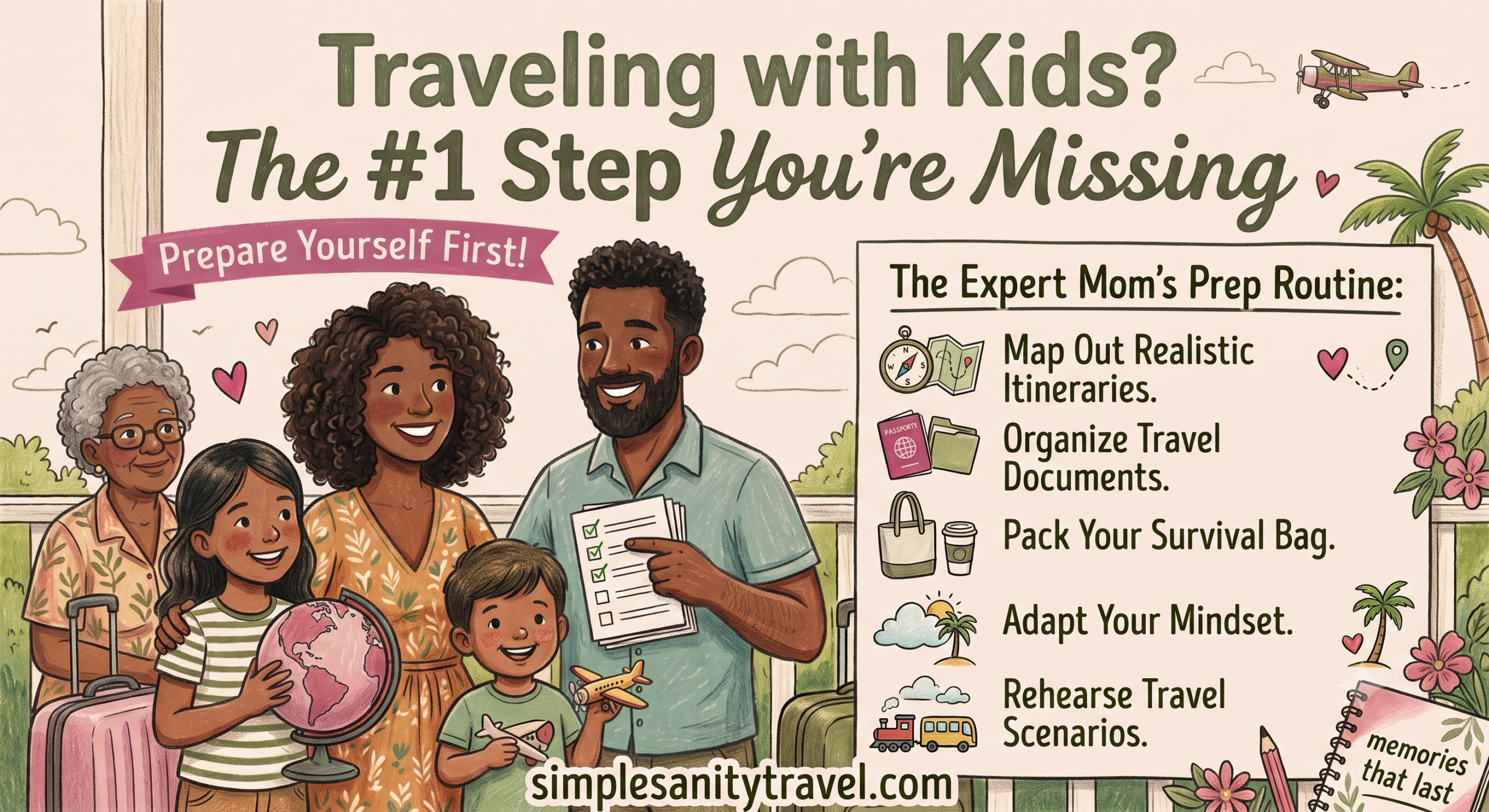
Step One: Plan the Trip Around Your Own Nervous System
This is the part everyone skips, so we’re doing it first.
Know your limits and honor them. After that flight, I made a rule: I don’t fly alone with my daughter anymore. That’s not failure. That’s data. If solo travel with your toddler drains you before you even board, don’t do it if you have another option. Bring your partner, your mom, your sister. Or wait a season.
Pick the flight time that works for the adult, not just the child. Everyone told me early flights were best for kids. But I’m not a functional human on four hours of sleep, and my daughter needs a functional human. Choose the departure time that lets you show up rested. A calm parent at 1pm beats a frazzled one at 6am every time.
Protect the morning of. And the night before. And everyone involved. No hard conversations. No packing at the last minute. No fights with your husband, if you can help it. Ask me how I know.
That fight on the morning of my disaster flight? It started the night before. We went to a party, my husband stayed out until 2am, and I was home alone with the baby, finishing the packing and lying awake until he made it back safely. He wasn’t even flying with us the next day. Didn’t matter. His choices still landed on my travel day.
So here’s the rule: travel prep applies to everyone remotely involved in the logistics, not just the people getting on the plane. The night before a trip is not the night for anyone in the house to go rogue. Your travel day starts the evening before, and everything the whole household does to keep you calm is preparation for your child.
I grew up in the Dominican Republic, where trips were built around the adults and the kids just adapted. I don’t think we need to go back to that. But we’ve swung so far the other way that moms plan entire vacations around a toddler’s preferences while running on fumes. There’s a balance, and it should never come at the expense of your sanity.
Step Two: Make the Trip Make Sense to Your Child
Travel is abstract to little kids. “We’re going to England” means nothing to a 3-year-old. Your job is to turn the unknown into something they can picture and get excited about.
Frame the trip as a party. This is one of the first strategies I teach clients, and it works like a charm at my house. Any outing becomes “we’re going to a party in Puerto Rico.” Kids understand parties. Parties are good. Sometimes the “party” ends up being a dance party in the hotel room, just the two of us, and she still looks forward to it for days. The point is giving her a happy picture to hold onto instead of a blank unknown.
Use coloring books about the destination. In the weeks before a trip, we color pictures of the place we’re going. Planes, beaches, castles, whatever fits. By travel day, the destination feels familiar instead of scary.
Talk through the plane rules early. Gentle voices, no kicking seats, seatbelts stay on. Little kids do better with rules they’ve already heard ten times than rules invented mid-meltdown.
Step Three: Give Them Control (Within Your Fence)
Kids melt down when they feel powerless. So hand over the small choices while you keep the big ones.
Let them pick their own outfits, blankets, and toys. My daughter chooses what she wears and which comfort items come with her. Familiar things are an anchor. When everything around her is new, her blanket isn’t.
Let them choose the plane toys and snacks, with a twist. She picks new toys and snacks for the trip, but they stay sealed until we arrive. Then I tell her I have more surprises, and she earns them by handling the flight well.
Yes, these are bribes. I’m not going to dress it up. A well-timed bribe is a tool, and I will use every tool I have at 35,000 feet.
The iPad flies with us. Zero guilt. Screen time rules are for the ground. A flight is survival mode, and a peaceful cabin is a gift to everyone on board, including you.
Step Four: Buy Back Control Wherever You Can
Flying with a small child is unpredictable. So I pay to make the parts I can control, controlled. This is where I part ways with the standard advice.
Skip the lap seat. My daughter has had her own seat since her first flight at six months old. I know the lap option is free under age two. I also know that a squirming toddler on your lap for four hours is not free. You pay in sweat, sore arms, and stress. Her own seat means her own space, and a car seat is the safest place for her to be up there anyway.
Pay to choose your seats. Every time. I will not gamble on being separated from my child or stuck in a middle seat with her. It costs more. It’s worth every penny.
Trade structure for flexibility. Here’s a confession: I love a guided tour. Give me a schedule, a knowledgeable guide, and a plan, and I’m happy. But with littles, I flip it completely. We do self-guided everything, and I schedule a maximum of one activity per day. If she’s not feeling it, we leave. If I’m not feeling it, we leave. Nobody has to push through for a tour group, and nobody paid for six hours of misery. The activity serves us, not the other way around.
Book two beds at the hotel. The toddler gets her own bed and everyone sleeps better. This works for babies too: mom shares one bed with a breastfeeding baby while the other bed serves dad or becomes a safe play area. One king bed sounds romantic until three people are in it and nobody’s asleep.
What Actually Goes in the Carry-On
Clients ask me this constantly, so here’s my short list:
The comfort items your child chose. The sealed new toys and snacks. The loaded iPad with everything downloaded, because plane wifi is a liar. A full change of clothes for the child and for you. Wipes, always more than you think. And the backup surprises you’ll hand out like a game show host when things get shaky.
Notice what’s not on the list: fifteen activities they’ll ignore. Pack less, rotate more.
Frequently Asked Questions
How do I prepare my toddler for their first flight? Start weeks ahead, not the night before. Talk about the trip in terms they understand (we call it a party), color pictures of the destination, and practice the plane rules. On travel day, your calm matters more than any toy you packed.
How early should I start preparing my kids for a trip? Two to three weeks before is the sweet spot for toddlers and preschoolers. Long enough to build excitement, short enough that they don’t lose interest or get anxious waiting.
Does my toddler need their own plane seat? Under two, airlines let them fly free on your lap. I still buy the seat. It’s safer, it gives them their own space, and it saves your body and your patience on anything longer than an hour.
What’s the best time of day to fly with small kids? The time that lets you show up rested and calm. Early flights only help if the whole family, parents included, can function at that hour. Be honest about that.
What snacks can I bring through security for my child? Solid snacks are fine in any amount. Baby food, toddler drinks, formula, and breast milk are allowed over the usual liquid limit when you’re traveling with your child. Pack them separately so security moves faster.
What if my child melts down anyway? They might. Prepare well, then accept that some rough moments will happen no matter what. Handle the moment, let go of the audience, and move on. A meltdown is a moment, not a verdict on you as a mother.
You Can Do This
Here’s the truth under all of it. Your child will never be more prepared for a trip than you are regulated for it. Start with your own needs, hand your kid a picture of what’s coming, and buy back control where money can buy it.
And if planning the whole thing still makes your chest tight, that’s literally what I’m here for. Book a consultation call and let someone take care of you for once.
Not sure what kind of traveler you even are anymore since becoming a mom? Take the free Travel Sanity Assessment and find out.