
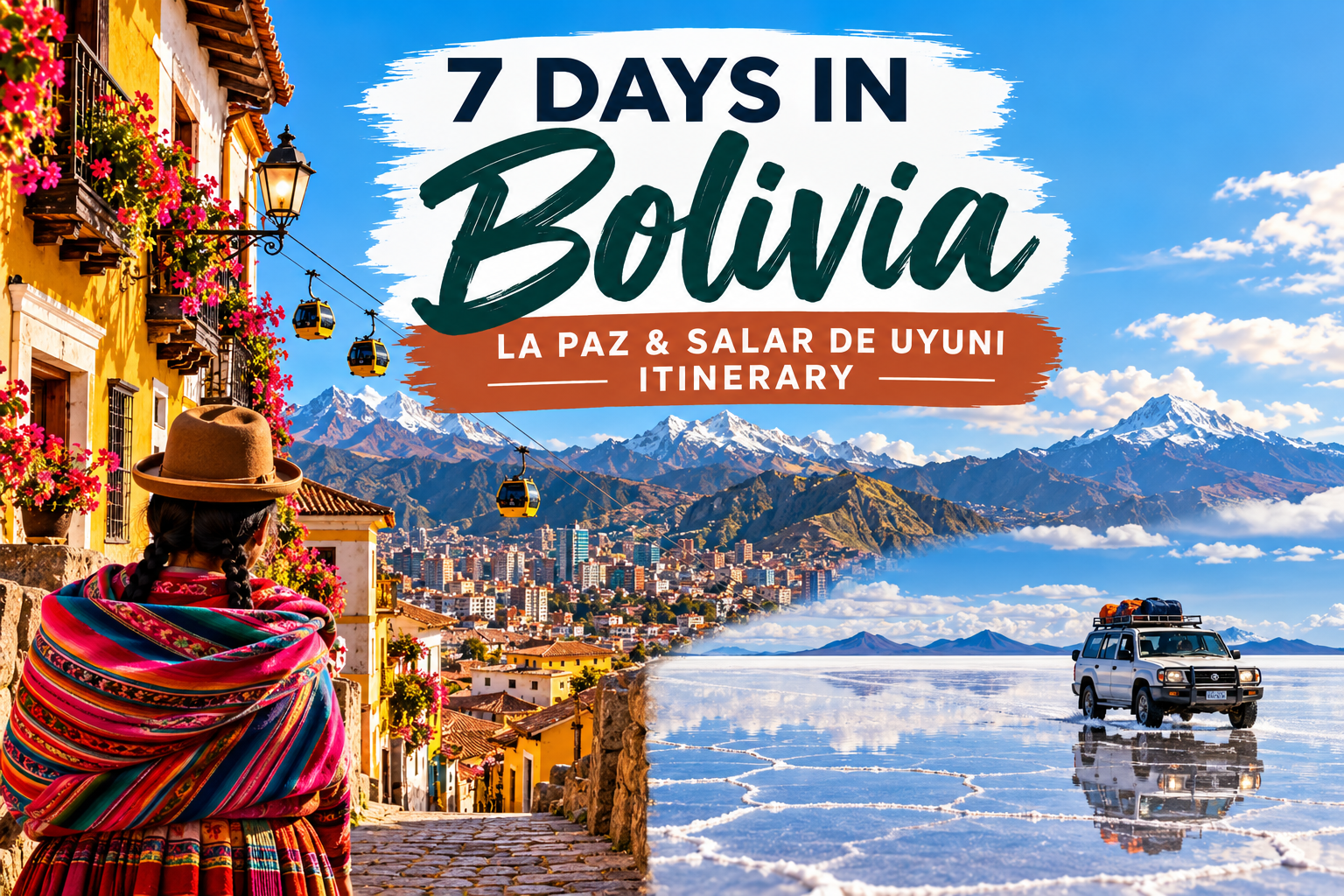
How to Travel to Bolivia Without Losing Your Sanity
Bolivia does not ease you into the trip. La Paz sits high in the Andes, the Salar de Uyuni stretches into what looks like the edge of the earth, and a few days later you can be bouncing across the Altiplano in a 4×4 surrounded by flamingos, volcanoes, geysers, and colorful lagoons.
That is also why Bolivia deserves a little restraint. For a first trip, I would rather give La Paz and Uyuni seven well-planned days than collect five Bolivian cities and spend half the vacation recovering from the transportation between them.
This post may contain affiliate links. If you book or purchase through one of these links, I may earn a commission at no additional cost to you. I only share options that I believe are genuinely useful for planning your trip.
Why Go to Bolivia?
Bolivia packs an enormous amount of geographic and cultural variety into one country. The Andes dominate much of this first-trip route, but Bolivia also includes Amazonian landscapes, valleys, colonial cities, Indigenous communities, high-altitude lakes, deserts, and one particularly enormous salt flat.
For this itinerary, I would focus on two places that immediately show you how different Bolivia can feel: La Paz and the Salar de Uyuni.
La Paz gives you markets, museums, food, Aymara culture, steep neighborhoods, mountain views, and a cable-car system that doubles as one of the easiest ways to understand the city’s unusual geography.
Uyuni takes the trip in an entirely different direction. The salt flat is the headline, but a multi-day expedition can continue into high-altitude deserts, flamingo-filled lagoons, geysers, hot springs, and otherworldly Altiplano landscapes.
The trick is accepting that Bolivia does not need to fit into one trip.
PLAN IT
How Many Days Do You Need in Bolivia?
I would plan seven days at minimum for this particular route.
Here is the basic structure:
Day 1: Arrive in La Paz and acclimatize
Day 2: Explore La Paz
Day 3: La Paz with a flexible second sightseeing day
Day 4: Fly to Uyuni and begin the Salar expedition
Day 5: Altiplano lagoons and desert landscapes
Day 6: Geysers, hot springs, and return toward Uyuni
Day 7: Fly back to La Paz and connect onward, or add an overnight buffer
There is an important caveat here: do not book Day 7 as a tight chain of unrelated tickets and hope Bolivia cooperates.
Roadblocks, demonstrations, weather, transportation changes, and flight disruptions can affect travel. If your international flight home is expensive or difficult to replace, an extra night in La Paz is not wasted vacation time.
It is insurance with a hotel bed.
Why Should You Start in La Paz?
Altitude.
La Paz sits very high in the Andes, and the Uyuni circuit goes higher still. Parts of a multi-day Altiplano expedition can take you to elevations approaching 5,000 meters, or more than 16,000 feet.
That makes La Paz more than a sightseeing stop. It is part of the pacing strategy.
On arrival day, keep expectations low. Check into your hotel. Eat. Hydrate. Walk a little if you feel well. Then stop.
This is not the afternoon for proving that your fitness tracker has underestimated you.
Altitude affects people differently, regardless of fitness. If symptoms become significant or concerning, treat that as a health issue rather than something you need to push through for the itinerary.
What Should You Do With Two Full Days in La Paz?
Once you have given yourself some time to adjust, use the city itself as the experience rather than treating La Paz as a waiting room for Uyuni.
Ride Mi Teleférico for the views and a completely different perspective on the city. Spend time around the historic center and markets. Look for opportunities to learn about Aymara history and contemporary culture rather than treating Indigenous culture as scenery.
Then keep your second full day flexible.
You might visit Valle de la Luna, where eroded clay formations create a landscape dramatically different from central La Paz.
Or spend the day eating, exploring neighborhoods, visiting museums, and continuing to acclimatize.
You do not need to add a strenuous mountain excursion because the Andes are sitting there looking at you.
Should You Fly or Take the Bus From La Paz to Uyuni?
For a seven-day trip, I would fly.
The overnight bus can save money and a hotel night, and it may make sense for a longer backpacking-style trip. But it also means spending a night in transit immediately before a multi-day high-altitude 4×4 expedition.
For a short trip, protecting your time and sleep can be worth the extra cost.
This is one of those places where AFFORD IT does not automatically mean choosing the cheapest transportation.
Schedules can change, so check current La Paz-to-Uyuni flight options before building the rest of the itinerary around a particular departure.
Do You Need Three Days at Salar de Uyuni?
You can visit the salt flat in one day.
I would still choose three days if your schedule and budget allow it.
The Salar is only the beginning of the classic southwest circuit. Multi-day trips can continue into the Eduardo Avaroa region, where the landscape changes to volcanic desert, colorful lagoons, flamingos, geysers, rock formations, and hot springs.
That is the experience I would travel this far for.
Just understand what you are booking. A three-day Uyuni trip is not three leisurely days wandering around a salt flat.
It involves a lot of driving, very high elevations, early starts, remote terrain, and potentially basic accommodations. Some shared tours use simple refugios and shared facilities. Upgraded or private tours may include more comfortable accommodations and private bathrooms.
Compare the actual experience, not just the price.
What Should You Ask Before Booking a Uyuni Tour?
This is one place where I would not choose an operator because it saved $17.
Ask about:
- Vehicle condition
- Group size
- Driver experience
- Guide language
- Accommodation type
- Heating
- Private versus shared bathrooms
- Meals and drinking water
- Entrance fees
- Emergency procedures
- Where the tour begins and ends
- What happens if weather changes the planned route
You are heading into remote terrain where cell service and roadside assistance may be limited.
Spend thoughtfully here.
When Is the Best Time to Visit Bolivia and Uyuni?
There are really two different answers.
May through October is generally the drier part of the year in Bolivia and works well for travelers prioritizing outdoor activities and more predictable overland conditions.
For Uyuni specifically, the famous mirror effect happens when a thin layer of water covers portions of the salt flat during the rainy season. December through roughly February or March is the period most associated with those enormous reflections.
But there is a tradeoff.
Water can make some areas inaccessible, and heavy rain can interfere with transportation and tour routes.
So think about what you actually want.
Want the enormous white geometric salt landscape and broader access across the Salar? Favor the dry season.
Dreaming specifically about those sky-reflection photographs? Consider the rainy season while accepting more uncertainty.
There is no secret week when you get every version of Uyuni at once.
What Are the Current Travel and Entry Guidelines for Bolivia?
Entry requirements and travel conditions can change, and Bolivia is one destination where older information online may no longer match current rules.
Before traveling, check current passport and visa requirements directly with Bolivian immigration or the appropriate Bolivian consular authority. U.S. travelers should also review the latest Bolivia information from the U.S. Department of State before departure.
Pay particular attention to:
- Passport validity requirements
- Current tourist visa rules
- Entry and exit requirements
- Current travel advisories
- Demonstrations and road closures
- Transportation disruptions
- Health and vaccination guidance
Roadblocks and demonstrations can affect overland transportation, so build some flexibility into the itinerary rather than assuming every transfer will operate exactly as planned.
Re-check the official requirements shortly before your trip.
Is Bolivia a Good Trip for Solo Travelers, Kids, or Multigenerational Families?
It can be, but the answer depends heavily on the traveler.
Solo travelers may find shared Uyuni tours particularly useful because transportation and logistics are bundled into the expedition. Research the operator carefully and confirm accommodation arrangements before booking.
Families with children need to think seriously about altitude, long driving days, cold temperatures, and the remoteness of the Uyuni circuit. Bolivia can absolutely be a family destination, but this exact itinerary is not automatically the right first international trip for every child.
If you are still figuring out how your family handles travel days, start with my guide to preparing your kids for travel.
Multigenerational groups should evaluate mobility, altitude tolerance, vehicle comfort, bathroom access, and accommodation standards before committing to the three-day expedition.
My guide to planning multigenerational vacations can help you think through those tradeoffs.
Sometimes the better family decision is a comfortable La Paz stay plus a shorter Uyuni experience.
You do not get bonus points for choosing the hardest version.
AFFORD IT
How Much Should You Budget for Bolivia?
Bolivia can be relatively affordable compared with many major South American destinations, but the Uyuni expedition changes the math because several days of transportation, lodging, meals, and guiding may be bundled together.
For this itinerary, I would use these planning ranges per person, per day, assuming two people share a room and excluding international airfare:
| Travel Style | Planning Budget |
|---|---|
| Affordable | $65–100 per person/day |
| Comfortable | $125–225 per person/day |
| Upscale | $300+ per person/day |
Treat those as planning ranges, not price promises.
Your biggest variables will be the Uyuni tour standard, La Paz hotel, domestic flights, private versus shared transportation, and how much comfort you want in remote accommodations.
A cheap La Paz lunch and a private three-day Altiplano expedition belong in very different budget conversations.
Where Is It Worth Spending More?
Spend on the Uyuni operator first.
A reliable vehicle, experienced driver, sensible group size, clear communication, appropriate accommodations, and a well-run expedition matter more here than shaving the tour price as low as possible.
I would also consider paying for the La Paz-to-Uyuni flight on a one-week itinerary. You are buying back time and potentially arriving better rested.
Finally, consider a more comfortable hotel for your first night in La Paz. After international travel at altitude, a quiet room in a convenient location can be worth more than an elaborate sightseeing schedule.
Where Can You Save?
Food, local transportation, and independent sightseeing in La Paz give you more room to control spending.
Mi Teleférico can be both transportation and sightseeing. Markets and neighborhood exploration do not require a large tour budget. And you do not need a private guide every day simply because you are in a new country.
Save where convenience adds little.
Spend where reliability, safety, time, or comfort meaningfully improves the trip.
Can You Use Hotel Points in Bolivia?
This is not a destination where I would design the entire itinerary around loyalty programs.
That is okay.
Check your Marriott Bonvoy, Hilton Honors, World of Hyatt, and IHG One Rewards options when planning La Paz, but compare the points rate against the actual cash price and location rather than assuming redemption equals value.
Uyuni is different. Independent and locally operated accommodations are much more relevant, particularly once you begin the remote expedition.
If points save you meaningful money in La Paz, use them. Then let yourself book the right local accommodation elsewhere.
If hotel points still feel like a second language, my Hotel Points 101 guide explains the basics without requiring a spreadsheet hobby.
Are Flight Points Worth Using for Bolivia?
Potentially.
International award availability to Bolivia can be more complicated than to larger South American gateways, so compare several combinations rather than searching only for one perfect award ticket.
Also look at whether paying cash for the short domestic La Paz-to-Uyuni flight lets you use your miles more effectively for the expensive international portion.
The goal is not to make every segment free.
The goal is to reduce the parts of the trip that would otherwise cost the most.
If you are new to this, my guide to using credit card points for family travel is a good place to start.
Should You Book Airbnb or Vrbo in Bolivia?
They can make sense in La Paz, particularly for longer stays, groups, or travelers who want more living space.
But compare the total cost, not the nightly headline price.
Look at cleaning fees, location, heating, elevators, luggage access, cancellation rules, security, and how easy it will be to arrive after a long international flight.
For a short first stay in La Paz, I would often favor a well-located hotel simply because it removes decisions.
For Uyuni and the Altiplano expedition, your lodging will often be tied to the tour operator anyway.
How Can Your Travel Spending Support the Local Economy?
Bolivia makes this relatively easy.
Eat at locally owned restaurants. Buy directly from artisans when you can. Hire reputable Bolivian guides. Choose locally operated experiences. Learn who made something before treating every market purchase as an opportunity to negotiate the price down.
Indigenous textiles and crafts are not generic souvenirs. Take the time to understand what you are buying and who made it.
Use the points where useful, save strategically, and be thoughtful about where the rest of your travel dollars go.
ENJOY IT
How Do You Protect Your Peace at High Altitude?
Stop scheduling your arrival day.
Seriously.
Your first job in La Paz is to arrive.
Give yourself time to eat, hydrate, sleep, and see how your body responds. Keep the following day adjustable too.
Then remember that Uyuni takes you even higher.
A vacation itinerary is not legally binding. If your body needs a slower day, take one.
What Should You Not Over-Plan in La Paz?
Your second full day.
Build your first sightseeing day around your priority experiences. Let the next one breathe.
Maybe you want Valle de la Luna. Maybe you discover a museum you want to spend more time in. Maybe you find a restaurant you want to return to. Maybe altitude tells you that sitting somewhere with a coffee is today’s cultural activity.
All acceptable.
What Can You Skip on a First Bolivia Trip?
You can skip Lake Titicaca, Sucre, Potosí, the Amazon, and the Death Road on this itinerary.
Not because they are not worth visiting.
Because Bolivia will still exist after Day 7.
Lake Titicaca could easily become part of a longer La Paz-centered trip. Sucre and Potosí pair naturally for a different history-focused route. The Amazon deserves enough time to be more than a flight and a photograph.
And the Death Road is not mandatory simply because someone on the internet called it a bucket-list experience.
Your trip is allowed to have boundaries.
Is the Three-Day Uyuni Tour Actually Relaxing?
Not particularly.
It can be extraordinary. That is different.
Expect long stretches in a 4×4, early mornings, cold conditions, basic infrastructure, and high elevation.
That is why I would not schedule a packed sightseeing day immediately afterward.
Leave yourself some recovery space before the journey home.
What Is the Sanity-Saving Way to Plan Bolivia?
Choose fewer places.
Start slowly in La Paz. Let your body adjust. Spend enough time there to see the city rather than using it solely as an airport.
Then go to Uyuni and commit to the experience.
Bolivia does not need twelve destinations to feel adventurous. La Paz plus a three-day Salar and Altiplano expedition is already a substantial trip.
That is enough.
Want Someone Else to Handle the Bigger Trip?
If you want Bolivia but would rather hand off more of the transportation, lodging, and itinerary logistics, my travel partner offers a broader Bolivia itinerary that includes Lake Titicaca and Uyuni.
That is a different trip from the seven-day La Paz-and-Uyuni route above, which is exactly why I like it as an alternative. It makes sense for travelers who want to see more of Bolivia but do not want to independently coordinate every transfer and hotel along the way.
You will give up some independence.
You will also give up some spreadsheets.
Travel information in this guide was accurate at the time of posting. Prices, routes, schedules, hotel and tour availability, entry requirements, travel advisories, and other travel details can change. Conditions in Uyuni can also affect tour routes and access within the salt flat. Always confirm current information directly with the relevant provider or official source before your trip.
Related Blog Posts
- Hotel Points 101: How to Earn Free Nights Without Turning It Into Another Job
- How to Prepare Your Kids for Travel: Start With Yourself
- Five Multigenerational Vacation Ideas for Families Traveling With Elderly Parents or Grandparents
- The Overwhelmed Parent’s Guide to Using Credit Card Points for Family Travel