How to Travel to Puerto Rico Without Losing Your Sanity
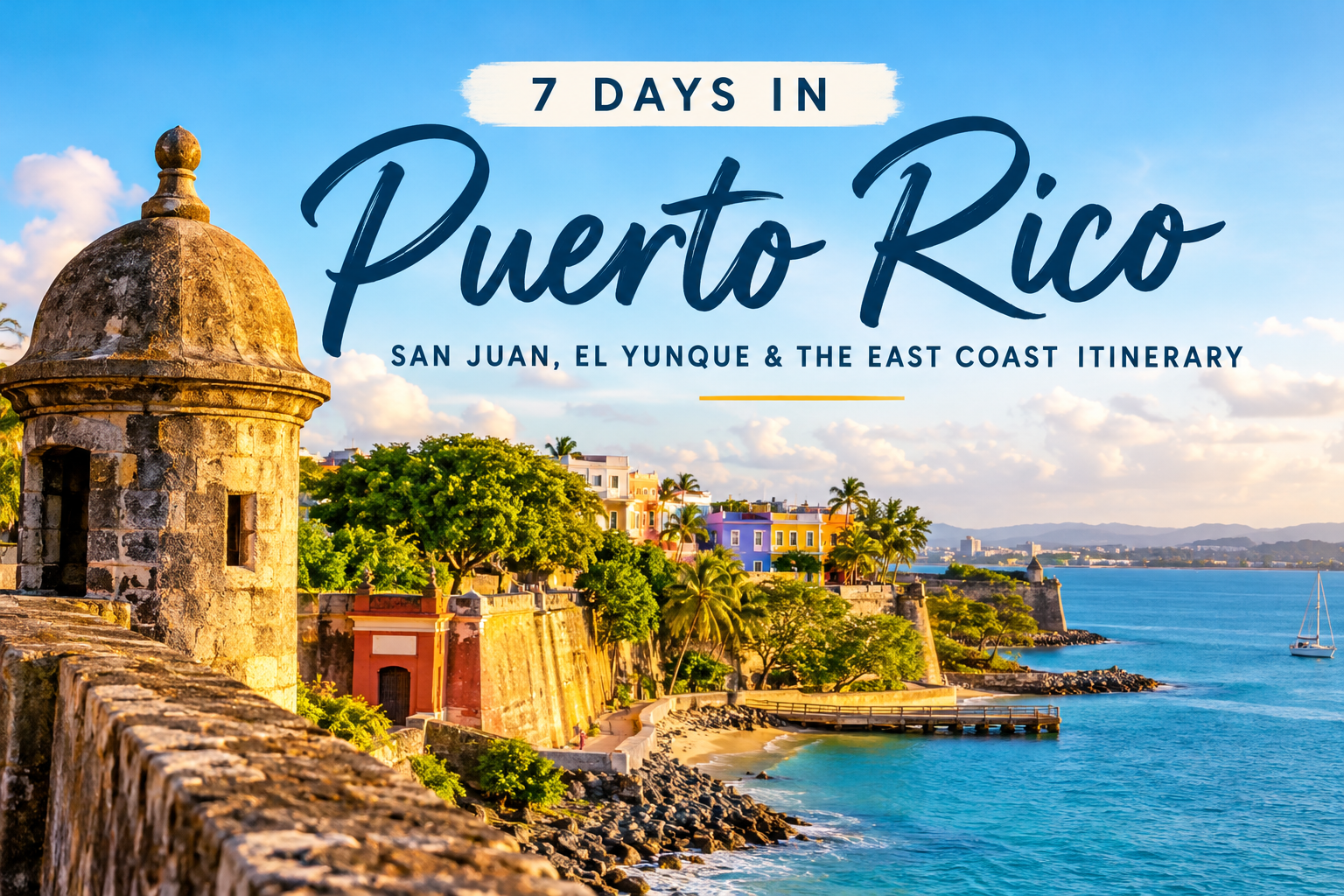
Walk along the massive stone walls of Old San Juan, eat mofongo and pernil, explore a tropical rainforest, then spend a few days enjoying Puerto Rico’s Caribbean coastline.
And you can do all of that without a passport if you’re a U.S. citizen traveling directly from the mainland United States.
I’ve visited Puerto Rico at least twice, and some of my favorite memories have nothing to do with rushing from one attraction to another. They involve good food and a family photoshoot at one of Old San Juan’s historic forts. I still haven’t made it to El Yunque, which is a good reminder that you don’t have to see everything on your first trip.
This 7-day Puerto Rico itinerary combines San Juan, El Yunque National Forest, and the eastern coast. You’ll get history, food, culture, rainforest scenery, and beach time without trying to drive around the entire island in one week.
This post may contain affiliate links. If you book or purchase through one of these links, I may earn a commission at no additional cost to you. I only share options that I believe are genuinely useful for planning your trip.
Why Go to Puerto Rico?
Puerto Rico gives travelers an interesting combination of Caribbean island experiences and familiar logistics for visitors from the mainland United States.
You can explore centuries-old Spanish fortifications, visit neighborhoods shaped by Puerto Rican art and music, eat dishes rooted in the island’s distinctive culinary traditions, hike in a tropical rainforest, and spend time on beaches that feel far removed from city life.
Spanish is the dominant language, although English is also an official language and is commonly used in many visitor areas.
Puerto Rico is a U.S. territory, not an independent country. Its history, political status, and cultural identity deserve more context than simply calling it an easy Caribbean getaway.
For a first trip, I recommend San Juan + El Yunque + the eastern coast because these experiences fit together geographically.
You can see several sides of Puerto Rico without making every day a long drive.
PLAN IT
How Many Days Do You Need in Puerto Rico?
Seven days is a comfortable starting point for San Juan, El Yunque, and the eastern coast.
I would divide the trip into two bases:
- Days 1–4: San Juan, with time for Old San Juan, food, culture, and nearby beaches.
- Days 5–7: Río Grande or Luquillo, with El Yunque and a slower coastal finish.
You can also stay in San Juan for the entire week and visit the east coast on day trips. That saves a hotel change but adds driving.
For this itinerary, I prefer two bases because the second half should feel different from the first.
What Should You Do on Your First Day in San Juan?
Keep arrival day easy.
Fly into Luis Muñoz Marín International Airport (SJU), settle into your hotel, and choose a nearby place for dinner.
Depending on your arrival time and where you’re staying, a waterfront walk or an early evening in Old San Juan might be enough.
You do not need to land, unpack, and immediately start a three-hour walking tour.
Save the big sightseeing day for tomorrow.
What Should You See in Old San Juan?
Old San Juan is one of the places I would give real time to, especially on a first visit.
Start with the historic streets, plazas, colorful buildings, and waterfront views. Then visit at least one of the two major Spanish fortifications:
Castillo San Felipe del Morro, commonly called El Morro, overlooks the entrance to San Juan Bay. Castillo San Cristóbal was built to help defend the city from land-based attacks.
Both are part of San Juan National Historic Site, managed by the National Park Service.
One of my favorite memories from Puerto Rico is doing a family photoshoot at one of Old San Juan’s historic forts. We came home with photographs that mean more to me than another checked box on a sightseeing list.
That experience is also why I recommend leaving time to enjoy the setting instead of treating Old San Juan like a race between landmarks.
If you’re traveling with children, the large open spaces and ocean views around El Morro can be memorable, but plan for sun, heat, wind, and plenty of walking.
What Else Should You Experience in San Juan?
Give San Juan another day beyond the historic center.
Depending on your interests, consider:
- Santurce: Murals, galleries, restaurants, and contemporary creative culture.
- Condado: Beachfront hotels, restaurants, and an easy resort-style base.
- Ocean Park: A more residential beach neighborhood with restaurants and guesthouses.
- Isla Verde: A convenient beach area near the airport.
I would choose one neighborhood or experience as the main focus, then leave room for a meal, a beach walk, or an unplanned stop.
If you want to explore Puerto Rican art or music, look for locally led cultural experiences rather than trying to fit every neighborhood into one day.
What Food Should You Try in Puerto Rico?
Food is one of the things I remember most from my visits.
Mofongo, arroz con gandules, and pernil are absolutely on my list. And if you enjoy beer, a cold Medalla is a familiar local choice.
Mofongo is typically made from mashed fried green plantains with garlic and other seasonings, often served with meat or seafood.
Arroz con gandules combines rice with pigeon peas and seasonings, while pernil is slow-roasted pork that often appears at family gatherings and celebrations.
Puerto Rican cooking reflects Indigenous Taíno, African, Spanish, and other influences. Different households and restaurants prepare these dishes in their own ways.
My recommendation is to make time for a proper Puerto Rican meal rather than eating every lunch wherever happens to be closest to the next attraction.
How Do You Get to El Yunque National Forest?
El Yunque is in northeastern Puerto Rico, making it a practical stop between San Juan and the eastern coast.
It’s the only tropical rainforest in the U.S. National Forest System and one of Puerto Rico’s most distinctive natural environments.
I haven’t visited El Yunque personally, even after multiple trips to Puerto Rico. It’s high on my list for a future visit.
For this itinerary, I would plan one main rainforest day, not several rushed stops.
Choose a trail or scenic area appropriate for your group’s abilities, allow extra time for changing weather, and check official Forest Service updates before heading out.
Rain, muddy paths, road restrictions, and temporary closures can affect access. Do not assume every waterfall or trail you saw in a social media video will be accessible on your travel date.
A rental car is generally the most practical way to explore this part of Puerto Rico independently. Guided transportation may be worth considering if you don’t want to drive.
Where Should You Stay on Puerto Rico’s East Coast?
For a first trip, I would compare Río Grande and Luquillo.
Luquillo
A good choice for travelers who want a beach-town atmosphere, casual food, and access to El Yunque. It can work especially well if you plan to spend more time outside your hotel.
Río Grande
A better fit if you want a resort-focused stay, more time by the pool, or a property with extensive amenities. Some of the area’s larger resorts also participate in hotel loyalty programs.
Both make sense for the itinerary. The better choice depends on whether you want the hotel to be a major part of the vacation.
What Should You Do in Luquillo and the Surrounding Coast?
Give yourself a full beach day.
Luquillo Beach is known for its broad sandy shoreline and nearby food kiosks, where you can find casual Puerto Rican dishes and snacks.
You might also choose a guided kayaking experience, a nature excursion, or simply a day with no scheduled activities.
If you’re interested in visiting Vieques or Culebra, understand that they are separate island destinations requiring additional transportation planning.
They can be wonderful, but I would not casually add them to this itinerary without adjusting the schedule.
The same applies to bioluminescent bay experiences near Fajardo. They’re worth researching if they interest you, but conditions, weather, moonlight, operator schedules, and availability matter.
You don’t need to add a nighttime excursion after every full day.
What Does the Full 7-Day Puerto Rico Itinerary Look Like?
| Day | Destination | Plan |
|---|---|---|
| 1 | San Juan | Arrive, check in, easy dinner |
| 2 | Old San Juan | Historic streets, El Morro or San Cristóbal, relaxed evening |
| 3 | San Juan | Santurce, Puerto Rican food, neighborhood or beach time |
| 4 | San Juan | Flexible cultural day, beach, museum, or favorite experience |
| 5 | El Yunque / East Coast | Rainforest visit, transfer to Río Grande or Luquillo |
| 6 | Luquillo / East Coast | Beach day, food kiosks, optional nature or marine experience |
| 7 | East Coast / San Juan | Easy morning and return to SJU for departure |
For an early flight on Day 7, consider staying near the airport the previous night.
This itinerary is about choosing a manageable region of Puerto Rico, not proving you can see the entire island in seven days.
When Is the Best Time to Visit Puerto Rico?
Puerto Rico is warm throughout the year, but weather, crowds, and prices change by season.
December through April is generally the drier and more popular period for visitors looking for warm Caribbean weather during colder months back home. Expect higher demand and potentially higher lodging prices.
Late spring and early summer can offer a useful balance of weather and availability, although heat and rain are always possible.
June through November is Atlantic hurricane season, with the greatest regional activity often occurring from August through October. Travel during this period requires extra attention to forecasts, cancellation policies, and insurance coverage.
There isn’t one perfect month for every traveler.
Choose based on whether your priority is beach weather, lower crowds, hotel value, or schedule flexibility.
Do U.S. Citizens Need a Passport to Visit Puerto Rico?
No. U.S. citizens traveling directly between the U.S. mainland and Puerto Rico do not need a passport, because Puerto Rico is a U.S. territory.
However, adults flying domestically need identification that meets current TSA requirements, such as a REAL ID-compliant driver’s license or another accepted form of identification.
International travelers should check the U.S. entry requirements that apply to their citizenship and immigration status.
Puerto Rico uses the U.S. dollar, which also simplifies budgeting for mainland U.S. travelers.
Do You Need a Rental Car in Puerto Rico?
Not necessarily for San Juan.
If you’re staying in Old San Juan, Condado, or Isla Verde, you may be able to use taxis, rideshare services, and walking for much of your city stay.
But for El Yunque and the eastern coast, I would strongly consider renting a car.
That gives you flexibility for rainforest access, beaches, restaurants, and travel between accommodations.
One strategy is to skip the rental car during your first few days in San Juan, then pick one up before heading east.
Compare that against the cost of a full-week rental and any hotel parking fees.
For this itinerary, the best transportation choice is the one that makes the trip easier, not automatically the cheapest-looking option.
AFFORD IT
How Much Does a 7-Day Puerto Rico Trip Cost?
Puerto Rico can cost more than travelers expect, particularly when comparing beachfront hotels with other Caribbean destinations.
For planning purposes, I would use these estimated daily budgets per person, assuming two people share a room and excluding flights to Puerto Rico:
| Travel style | Daily budget | Approximate 7-day total |
|---|---|---|
| Affordable | $100–150 | $700–1,050 |
| Comfortable | $175–300 | $1,225–2,100 |
| Upscale | $375+ | $2,625+ |
These are planning estimates, not guaranteed prices. They assume a mix of lodging, meals, local transportation, and activities. Car rentals, parking, resort fees, tours, and holiday pricing can change the total significantly.
Families and groups may reduce per-person lodging costs by sharing accommodations, although they may need larger vehicles and rooms.
Where Is It Worth Spending More in Puerto Rico?
I would prioritize three things: location, reliable transportation, and experiences that matter to your group.
In San Juan, paying more for a convenient hotel can save time and transportation costs.
For El Yunque, a knowledgeable guide may be worth the money if you want help choosing appropriate trails or understanding the rainforest.
On the east coast, decide whether you want a resort experience or simply somewhere comfortable to sleep.
If you plan to spend most of the day exploring, you may not need an expensive resort.
If you want a few days of pool time, beachfront access, and very little planning, that same resort might be exactly where your money belongs.
Where Can You Save Money in Puerto Rico?
Some of Puerto Rico’s best experiences don’t require expensive tours.
Beach time, neighborhood walks, public plazas, local bakeries, and casual restaurants can balance out the cost of paid attractions.
Old San Juan is enjoyable simply to explore, even if you don’t enter every museum or historic site.
For the forts, check current National Park Service admission information and whether one admission covers both El Morro and San Cristóbal within the stated validity period.
You can also save by renting a car only for the portion of the trip when you need it, rather than paying for a vehicle and parking throughout your San Juan stay.
Can You Use Hotel Points in Puerto Rico?
Yes, and Puerto Rico is worth checking if you collect hotel points.
San Juan and the surrounding resort areas have properties associated with major hotel loyalty programs, including Marriott Bonvoy, Hilton Honors, World of Hyatt, and IHG One Rewards.
But don’t assume points automatically provide the best value.
Compare the cash rate, points rate, location, taxes, resort fees, parking, and cancellation terms.
For example, a points hotel that requires daily transportation may cost more overall than a well-located independent property.
My Hotel Points 101 guide explains how to evaluate redemptions without making travel rewards another job.
Can Credit-Card Points Help With Flights?
Absolutely worth checking.
Puerto Rico has frequent air connections with the mainland United States, and you may be able to book flights using airline miles or transferable credit-card points.
Compare cash prices against award tickets before transferring points.
If you’re traveling with children, pay attention to whether enough award seats are available for everyone.
My guide to using credit-card points for family travel can help you decide when using points makes sense and when paying cash is the simpler choice.
Is Airbnb or Vrbo Better Than a Hotel?
Vacation rentals can be useful in Puerto Rico, especially for families, multigenerational groups, and longer stays.
A kitchen, separate bedrooms, and laundry facilities may be worth more than daily housekeeping.
But compare the complete cost, including cleaning fees, service fees, parking, and transportation.
In San Juan, location can matter more than extra space.
In Luquillo or Río Grande, a rental may be a good fit if your group wants a relaxed home base and plans to explore independently.
Consider professionally managed or properly registered accommodations, review cancellation policies, and confirm amenities that matter in a tropical climate, including air conditioning and backup power arrangements.
How Can You Support Local Businesses?
Make room in your budget for Puerto Rican-owned restaurants, bakeries, guides, shops, and guesthouses.
Try regional dishes prepared by local cooks. Buy art or crafts directly from makers when possible. Choose locally led cultural experiences.
You can use hotel points for part of your trip and still direct plenty of your spending into the local economy.
Use the points where useful, save strategically, and be thoughtful about where the rest of your travel dollars go.
ENJOY IT
What Should You Skip on a First Trip to Puerto Rico?
For this particular seven-day itinerary, I would skip trying to add the entire west coast, Ponce, the central mountains, Vieques, and Culebra.
Not because those places aren’t worth visiting.
Because they are.
And they deserve more than being squeezed into a trip that already includes San Juan, El Yunque, and the east coast.
If Vieques or Culebra is your main priority, build the itinerary around that island instead.
Puerto Rico is small enough to look manageable on a map but varied enough to fill several trips.
How Do You Keep Old San Juan Enjoyable?
Go early when possible, wear comfortable shoes, carry water, and plan breaks from the heat.
The historic streets can be uneven, and the forts involve open spaces with limited shade.
Choose one fort if your group doesn’t want to visit both.
Take the family photos.
Sit somewhere with a view.
Eat lunch without watching the clock.
My own family photoshoot in Old San Juan is proof that an experience doesn’t have to involve visiting ten attractions to become one of the most memorable parts of a trip.
Is Puerto Rico Good for Families?
Yes, especially when you balance city experiences with outdoor time.
Old San Juan can be interesting for children, but younger kids may enjoy the forts’ open spaces more than a long historical walking tour.
El Yunque adds nature and discovery, while Luquillo gives families time to enjoy the beach.
Check ocean conditions carefully, since not every Puerto Rican beach is suitable for swimming on every day.
If you’re traveling with younger children, my article on preparing your kids for travel offers practical ways to make the trip more manageable before you even leave home.
What About Solo Travelers and Multigenerational Groups?
For solo travelers, I would prioritize well-located accommodations, dependable transportation, and guided experiences when they make unfamiliar areas easier to navigate.
San Juan offers plenty to explore without renting a car for every day.
For multigenerational groups, pay particular attention to the walking involved in Old San Juan, rainforest trail conditions, accessibility, heat, and transportation.
Not everyone needs to do every activity together.
One person might want to explore a trail while another prefers a scenic drive or a relaxed morning at the hotel.
That’s a perfectly successful family vacation.
For more ideas, see my multigenerational vacation planning guide.
What Is the Protect Your Peace Rule for Puerto Rico?
Don’t turn a week in Puerto Rico into a race around the island.
You don’t need to visit every famous beach.
You don’t need to book a rainforest hike, a boat tour, a bioluminescent bay excursion, and a full sightseeing day back-to-back.
And you definitely don’t need to feel guilty about spending an afternoon eating good food and doing very little.
I’ve been to Puerto Rico more than once, and El Yunque is still on my list.
That doesn’t make the trips I already took incomplete.
It means there’s another reason to return.
Is San Juan + El Yunque + the East Coast Worth Seven Days?
Absolutely.
This route gives you historic Old San Juan, Puerto Rican food and culture, rainforest landscapes, and beach time without unnecessary flights or constant hotel changes.
Start with four days in San Juan. Then head east for El Yunque and a slower finish around Río Grande or Luquillo.
Make room for mofongo, arroz con gandules, pernil, and the experiences your family will actually remember.
You don’t have to do everything to have a meaningful Puerto Rico trip.
You just have to make room to enjoy the things you choose.
Travel information in this guide was accurate at the time of posting. Prices, routes, schedules, hotel and tour availability, entry requirements, identification rules, park access, attraction hours, weather conditions, and other travel details can change. Always confirm current information directly with the relevant provider or official source before your trip.
Related Blog Posts
Hotel Points 101: How to Earn Free Nights Without Turning It Into Another Job
The Overwhelmed Parent’s Guide to Using Credit Card Points for Family Travel
How to Prepare Your Kids for Travel: Start With Yourself
Five Multigenerational Vacation Ideas for Families Traveling With Elderly Parents or Grandparents