
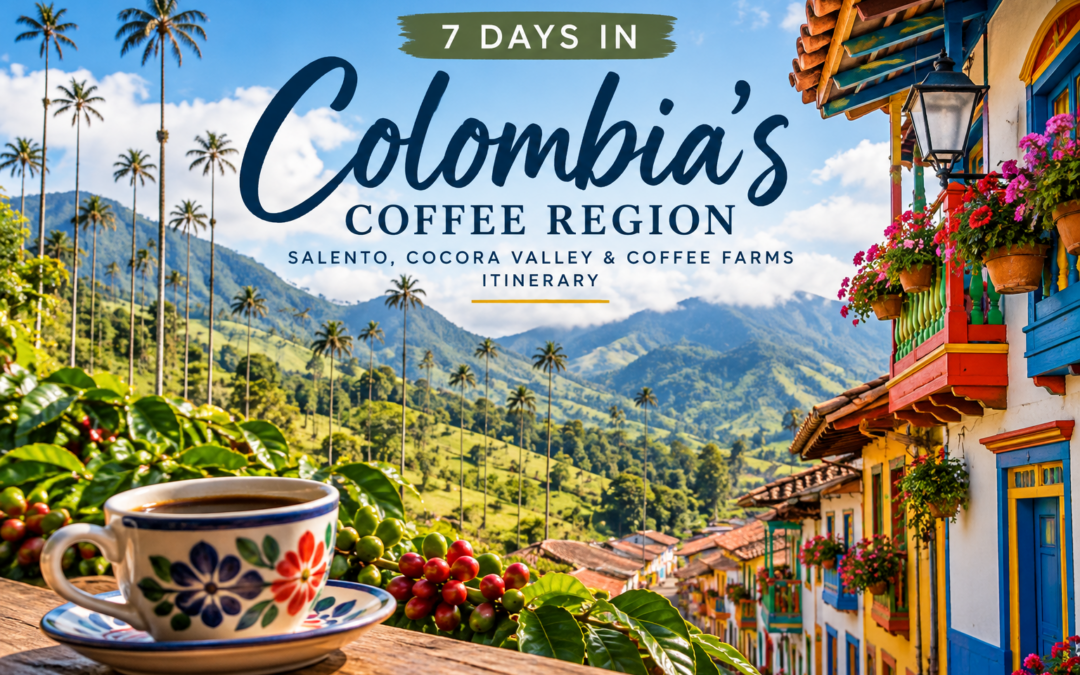
How to Explore Colombia’s Coffee Region Without Losing Your Sanity
Imagine waking up to green mountains, walking beneath towering wax palms in Cocora Valley, and drinking Colombian coffee on the farm where it was grown.
Then picture colorful streets, family-run restaurants, countryside views, and a few afternoons when you have absolutely nowhere else to be.
That’s the appeal of Colombia’s Coffee Region, also called the Eje Cafetero.
For this second Colombia guide, we’re leaving the big-city itinerary behind and spending seven days exploring Salento, Filandia, Cocora Valley, and the coffee-growing countryside.
You don’t need to visit Bogotá, Medellín, and Cartagena on the same trip to experience Colombia. Sometimes the better plan is to choose one region and give it the attention it deserves.
This post may contain affiliate links. If you book or purchase through one of these links, I may earn a commission at no additional cost to you. I only share options that I believe are genuinely useful for planning your trip.
Why Visit Colombia’s Coffee Region?
Colombia’s Coffee Region offers a different travel experience from the country’s major cities and Caribbean coast.
Here, the focus is on mountain landscapes, agricultural traditions, small towns, local food, and the people whose work supports Colombia’s coffee culture.
The broader Coffee Cultural Landscape includes areas of Caldas, Quindío, Risaralda, and northern Valle del Cauca. UNESCO recognized parts of this living agricultural landscape as a World Heritage Site in 2011.
The designation recognizes more than scenic coffee farms. It reflects generations of farming knowledge, settlement patterns, architecture, and the relationship between communities and mountainous terrain.
For a first visit, I recommend concentrating on Quindío, particularly Salento, Filandia, and the surrounding countryside.
This route works well for couples, friends, solo travelers, and families who enjoy nature and cultural experiences but don’t want every day packed with activities.
PLAN IT
How Many Days Do You Need in Colombia’s Coffee Region?
Seven days gives you enough time to explore without turning every mountain road into a race.
You could see the main highlights in three or four days, but a full week allows for weather changes, slower mornings, and experiences that go beyond taking photos.
For this itinerary, I recommend one primary base near Salento or in the Quindío countryside.
You can also divide your stay between a town hotel and a coffee hacienda, but changing accommodations isn’t necessary.
Here’s how I’d organize the week.
What Does a 7-Day Colombia Coffee Region Itinerary Look Like?
| Day | Destination | Main experience |
|---|---|---|
| 1 | Pereira or Armenia → Salento | Arrive, transfer, settle in |
| 2 | Salento | Colorful streets, local food, viewpoints |
| 3 | Cocora Valley | Wax palms, scenic walk or hike |
| 4 | Coffee countryside | Coffee farm tour and tasting |
| 5 | Filandia | Town exploration, artisan shops, viewpoints |
| 6 | Quindío countryside | Flexible nature or relaxation day |
| 7 | Pereira or Armenia | Departure |
The point of this route is simple: fewer transfers, enough time for the main experiences, and room for the unexpected.
How Do You Get to Colombia’s Coffee Region?
The most practical airports for this itinerary are Pereira (PEI) and Armenia (AXM).
Depending on where you’re flying from, you may need to connect through Bogotá or another Colombian city.
Pereira often has a broader range of flight connections, while Armenia can be convenient for accommodations in Quindío.
Compare the complete journey, not just the flight price.
A cheaper ticket isn’t always a bargain if it requires a long layover or leaves you arriving late at night.
I would arrange airport transportation before departure, especially if you’re staying at a countryside property.
Where Should You Stay: Salento, Filandia, or a Coffee Hacienda?
Each option offers a different experience.
Salento: Best for a First-Time Visit
Salento is a practical base if you want restaurants, shops, colorful streets, and relatively straightforward access to Cocora Valley.
It’s also a popular visitor destination, so expect more activity around its central streets and on weekends.
Choose a property within a manageable distance of the center if you prefer walking to dinner.
Filandia: Best for a Quieter Town Atmosphere
Filandia has colorful architecture, cafes, local shops, and countryside views.
It’s a good alternative if you want a town setting but prefer a different pace from Salento.
You can also stay in Salento and visit Filandia for the day.
Coffee Hacienda: Best for a Countryside Escape
A coffee hacienda or rural guesthouse can be one of the most memorable lodging choices in the region.
Imagine waking up surrounded by green hills, having breakfast outdoors, and spending the afternoon without needing to go anywhere.
But check transportation carefully.
A beautiful rural property may require a driver or rental car for every meal and excursion.
For a seven-day trip, I would choose Salento or a well-located countryside property as the main base rather than moving hotels every two nights.
What Should You Do in Salento?
Start by exploring the town at a comfortable pace.
Walk along Calle Real, browse shops, stop for coffee, and visit a viewpoint if the weather is clear.
The town’s colorful buildings are part of its appeal, but don’t spend the entire day treating the streets as a photo backdrop.
Stop for lunch. Talk with local business owners when the opportunity feels natural. Learn about the region’s agricultural history.
Try trucha, or trout, a common regional specialty, often served with plantains or other sides.
You may also encounter patacones, arepas, hearty soups, and dishes that reflect the food traditions of Colombia’s Andean interior.
Keep the afternoon flexible.
A good first full day doesn’t need to involve a long hike.
Is Cocora Valley Worth Visiting?
Yes. Cocora Valley is one of the defining landscapes of the Coffee Region.
Its most recognizable feature is the towering wax palm, Colombia’s national tree.
The palms rise above green hills, creating a landscape that looks different from what many travelers imagine when they think of Colombia.
But Cocora Valley is more than a photo stop.
It’s an area where visitors should pay attention to trail conditions, land management, and the ecological importance of the wax palms.
For this itinerary, I would dedicate most of Day 3 to Cocora Valley.
Do You Need to Hike in Cocora Valley?
No. You don’t need to complete a long hiking circuit to appreciate the landscape.
There are shorter scenic walking options as well as more demanding routes, depending on conditions and access.
If you enjoy hiking, research the route carefully and consider a local guide.
If you’re traveling with young children, older adults, or anyone who prefers a less strenuous experience, choose a shorter walk and spend more time enjoying the views.
Important: Cocora Valley’s visitor trails and nearby Los Nevados National Natural Park are not interchangeable. Entry requirements, restrictions, and environmental protections vary by area. Check the applicable trail operator and Colombia’s National Natural Parks authority before planning a longer route.
Bring comfortable shoes with traction, rain protection, and a warm layer.
Mountain weather can change quickly.
What Should You Expect From a Colombian Coffee Farm Tour?
A good coffee farm experience should help you understand the work behind the cup.
Depending on the farm, you may learn about planting, harvesting, processing, drying, roasting, and tasting coffee.
Look for a tour that explains the role of coffee-growing families and workers, rather than focusing only on tasting samples.
You don’t need to be a coffee expert.
Ask questions. Learn why altitude, rainfall, soil, and processing methods matter. Notice how much labor goes into producing coffee.
If possible, choose a locally operated farm that welcomes visitors and explains its agricultural practices.
One thoughtful coffee experience is more valuable than booking several nearly identical tours.
If you want a quieter day, schedule the tour in the morning and leave the afternoon open.
Is Filandia Worth a Day Trip?
Absolutely, especially if you enjoy small towns, local craftsmanship, and scenic views.
Filandia is known for its colorful streets, traditional architecture, and connection to the Coffee Region’s cultural landscape.
Spend time around the central plaza, visit artisan shops, and explore at a leisurely pace.
Basket weaving is one of the local craft traditions worth learning about.
Rather than buying the first souvenir you see, look for opportunities to purchase directly from artisans.
A visit to a viewpoint can round out the day, but leave enough time for a relaxed lunch.
Filandia doesn’t need a packed sightseeing schedule to be worthwhile.
What Should You Do With Your Extra Day in the Coffee Region?
This is where I would resist the urge to add another city.
You already have Salento, Cocora Valley, a coffee farm, and Filandia.
For Day 6, choose one experience based on your interests.
You could visit a botanical garden, book a birdwatching excursion, explore another small town, spend more time at your accommodation, or arrange a gentle countryside experience.
If you want something more active, research a guided nature excursion suited to your fitness level.
If you prefer relaxation, consider a countryside hotel with a pool, garden, or spa facilities.
And if Cocora Valley was rainy earlier in the week, this flexible day gives you a chance to adjust.
That flexibility is worth protecting.
When Is the Best Time to Visit Colombia’s Coffee Region?
The Coffee Region has a mild mountain climate, but rain is part of the landscape throughout the year.
There are generally relatively drier periods around December through February and July through August, although conditions vary by elevation and location.
Rainier periods often occur around March through May and September through November.
Don’t assume a dry-season trip guarantees sunny days.
For Cocora Valley, plan outdoor activities early when practical and keep a backup option for heavy rain.
Pack layers rather than relying on a single forecast.
And remember that holidays and weekends can bring more domestic visitors to popular towns and attractions.
Do U.S. Travelers Need a Visa for Colombia?
U.S. citizens generally do not need a visa for short tourist visits of up to 90 days, subject to Colombian immigration rules and approval.
You’ll need a valid passport and should confirm current entry requirements, onward travel documentation, and any required pre-arrival forms before departure.
Check the official Colombian immigration authorities and the U.S. State Department rather than relying on an old travel blog.
Colombia’s entry procedures and health recommendations can change.
Is Colombia Safe to Visit?
Travel safety deserves a serious look before booking.
The U.S. State Department’s advisory issued March 31, 2026, places Colombia at Level 3: Reconsider Travel, citing crime, terrorism, civil unrest, kidnapping, and natural disasters. Some areas carry a higher warning level.
That doesn’t mean every destination has the same risk.
But it does mean you should review the advisory, understand the areas it identifies, and make an informed decision about whether the trip is appropriate for you.
For the Coffee Region, I would prioritize reputable accommodations, prearranged transportation, trusted guides, and daytime travel between towns when practical.
Avoid displaying valuables unnecessarily, use established transportation services, and stay informed about local conditions.
If you’re traveling with children or a multigenerational group, build in additional flexibility and make sure everyone is comfortable with the travel arrangements.
Do You Need a Rental Car in the Coffee Region?
Not necessarily.
A rental car offers flexibility, but mountain roads, weather, unfamiliar driving conditions, and parking can add stress.
For many travelers, private transfers and guided day trips are worth comparing against a rental car.
If you stay in Salento, you may be able to walk to restaurants and arrange transportation for the main excursions.
If you stay at a rural hacienda, reliable transportation becomes more important.
For this particular trip, I would price out a combination of airport transfers and local drivers before automatically reserving a vehicle.
The goal is to spend your time enjoying the countryside, not worrying about navigation.
AFFORD IT
How Much Does a 7-Day Colombia Coffee Region Trip Cost?
Colombia’s Coffee Region can offer good value, particularly when you choose locally owned accommodations, eat at neighborhood restaurants, and focus on experiences rather than expensive resort amenities.
But transportation and guided activities can add up, especially if you’re staying in the countryside.
For planning purposes, I would use these estimated daily budgets per person, assuming two people share a room and excluding international flights:
| Travel style | Daily budget | Approximate 7-day total |
|---|---|---|
| Affordable | $60–95 | $420–665 |
| Comfortable | $110–190 | $770–1,330 |
| Upscale | $225+ | $1,575+ |
These are preliminary planning ranges, not verified quotes. They assume shared accommodation, meals, local transportation, and a reasonable mix of activities. Private drivers, premium haciendas, domestic flights, and holiday demand can increase the total.
If you’re traveling solo, accommodation and private transportation may cost more per person.
If you’re traveling as a family or group, sharing a vehicle or larger accommodation may improve the overall value.
Where Should You Spend More in the Coffee Region?
I would prioritize a well-located base, a quality coffee farm experience, and dependable transportation.
A slightly more expensive hotel that makes day trips easier may save you time and money.
A thoughtful, locally led coffee tour can give you a much better understanding of the region than several quick stops.
And a private driver may be worth the expense if it helps your group travel comfortably between rural attractions.
You don’t need to spend heavily on every category.
Choose the experiences that make this destination special to you.
Where Can You Save Money?
The Coffee Region is particularly well suited to slower travel.
You don’t need a paid excursion every day.
Walking through Salento, spending time in Filandia, visiting local cafes, and enjoying the views can fill plenty of time.
Look for accommodations that include breakfast, compare transportation costs before booking, and avoid scheduling multiple long-distance day trips.
You may also save by staying in one place for the full week.
And when you eat at local restaurants, you often get the opportunity to try regional dishes without paying premium hotel dining prices.
Should You Stay in a Hotel or a Coffee Hacienda?
This is one place where I would compare the experience, not just the nightly rate.
A hotel in Salento may offer convenience and easier access to restaurants.
A coffee hacienda may offer quieter surroundings, beautiful views, and an experience that’s part of the trip itself.
But check the complete cost.
A rural property that requires daily private transportation may not be the bargain it first appears to be.
If you’re traveling with children, compare room configurations, outdoor spaces, meal options, and how easily you can return to your accommodation during the day.
For a couple looking for a peaceful escape, a countryside stay may be worth the extra expense.
Can You Use Hotel Points in Colombia’s Coffee Region?
Possibly, but this isn’t a destination where I would build the entire trip around hotel loyalty programs.
Larger cities such as Pereira and Armenia may offer more opportunities to compare chain hotels, while smaller towns and rural areas have independent properties that can be a better fit for the experience.
If you collect Marriott, Hilton, Hyatt, or IHG points, check current participating properties and compare their locations carefully.
A points hotel in a city isn’t automatically a better deal if most of your activities are elsewhere.
My Hotel Points 101 guide explains how to decide when redeeming points actually makes sense.
Can Credit-Card Points Help With Flights to Colombia?
Yes, depending on your departure city, available award flights, and the airline programs you use.
You may be able to book international flights to Bogotá or another Colombian gateway with miles, then connect to Pereira or Armenia.
Compare the entire itinerary before transferring points.
Pay particular attention to baggage rules, connection times, and whether flights are on separate tickets.
For families, my guide to using credit-card points for family travel can help you evaluate whether an award booking is actually a good value.
Is a Guided Colombia Vacation Package Worth Considering?
Yes, particularly if you want to experience the Coffee Region but don’t want to coordinate multiple flights, hotels, and transfers.
A guided package may also appeal to travelers who prefer organized excursions and someone else handling the transportation between destinations.
The tradeoff is flexibility.
A package covering several Colombian regions will usually move faster than this seven-day Coffee Region itinerary.
Before booking, compare what’s included, what’s optional, how much free time you have, and whether the itinerary matches your preferred pace.
How Can You Spend More Thoughtfully in the Coffee Region?
Support locally owned accommodations, restaurants, coffee farms, guides, and artisans whenever possible.
Buy coffee from producers whose work you’ve learned about.
Take time to understand how coffee is grown and processed.
If you purchase handmade items in Filandia or Salento, consider buying directly from the people who make them.
The region’s cultural landscape isn’t just something to admire from a viewpoint. It’s a place where people live and work.
Use the points where useful, save strategically, and be thoughtful about where the rest of your travel dollars go.
ENJOY IT
What Should You Skip on a First Coffee Region Trip?
I would skip trying to visit every major city in the Coffee Triangle.
Pereira, Armenia, and Manizales all have their own appeal, but you don’t need to cover all three to have a meaningful visit.
For seven days, focus on Salento, Cocora Valley, Filandia, and the surrounding countryside.
I would also skip booking several similar coffee tours.
Choose one good experience and give yourself time to enjoy it.
If you want to see more of Colombia, save another region for another trip.
How Do You Avoid Crowds in Salento and Cocora Valley?
Try visiting popular attractions on weekdays when possible.
Start your Cocora Valley excursion early, particularly during busy travel periods.
In Salento, explore beyond the busiest shopping hours and consider having lunch or coffee away from the most crowded central spots.
You don’t have to avoid every popular place.
You just need to be thoughtful about when you go and how much time you spend there.
Is Colombia’s Coffee Region Good for Families?
It can be a great fit for families who enjoy outdoor experiences and a slower travel style.
Children may enjoy seeing how coffee grows, exploring colorful towns, and spending time in the countryside.
But don’t assume every farm tour is designed for younger children.
Ask about walking distances, steep terrain, accessibility, bathrooms, and how interactive the experience will be.
Cocora Valley also requires realistic expectations.
A short scenic walk may be more enjoyable for a family than an ambitious hike.
If you’re planning your first international family trip, my article on preparing your kids for travel offers ways to make the experience more manageable.
What About Solo Travelers and Multigenerational Groups?
For solo travelers, I would prioritize a central accommodation, organized transfers, and small-group excursions.
A guided coffee tour or day trip can simplify transportation while providing opportunities to learn from local experts.
For multigenerational groups, focus on comfortable lodging, manageable walking routes, and flexible activity options.
Cocora Valley’s uneven and potentially muddy terrain may not work for everyone.
That’s okay.
Some travelers may prefer a scenic outing and lunch while others take a longer walk.
The group doesn’t have to do everything together.
For more ideas, see my multigenerational vacation planning guide.
What Is the Protect Your Peace Rule for Colombia’s Coffee Region?
Don’t schedule every hour just because there are beautiful places nearby.
Mountain travel takes time.
Weather changes.
A coffee tour may last longer than expected because you’re enjoying the conversation.
And sometimes the best part of a countryside stay is sitting outside with a cup of coffee and nowhere else to be.
Leave room for those moments.
I would protect at least one afternoon and one full flexible day during the week.
If the weather is beautiful, you can explore.
If it rains, you can adjust.
If everyone is tired, you can rest.
That’s not wasted vacation time.
Is Colombia’s Coffee Region Worth a Full Week?
Absolutely, especially if you’re interested in nature, food, agriculture, culture, and slower travel.
Seven days gives you time to experience Salento, see the wax palms of Cocora Valley, visit a working coffee farm, explore Filandia, and enjoy the countryside without rushing.
You don’t need to combine it with Colombia’s biggest cities to make the journey worthwhile.
And you don’t need to come home exhausted to feel like you’ve seen enough.
Sometimes the best itinerary is the one that gives you time to appreciate where you are.
Prefer a Planned Colombia Trip? Here’s an Alternative
If you’d rather have flights, hotels, transportation, and major excursions organized for you, my travel partner offers an 11-day Colombia itinerary combining the Coffee Region with Bogotá, Medellín, Cartagena, and the Rosario Islands.
The trip includes time in the Coffee Region, with visits to Filandia, Cocora Valley, and Salento. It also includes domestic flights and several guided activities.
It’s important to understand that this is not the same as the slower seven-day itinerary above. The package spends only part of its 11 days in the Coffee Region and includes several additional destinations.
It’s a better fit if you want a broader introduction to Colombia and prefer a more structured itinerary.
A coffee farm excursion is listed as optional, so check the current inclusions and prices before booking.
Explore the 11-Day Colombia Coffee Region & Caribbean Beaches Trip
Compare departure dates, flight options, hotel categories, included excursions, optional activities, and cancellation terms before making a decision.
Travel information in this guide was accurate at the time of posting. Prices, routes, schedules, hotel and tour availability, entry requirements, safety advisories, park access, attraction hours, weather conditions, and other travel details can change. Always confirm current information directly with the relevant provider or official source before your trip.
Related Blog Posts
Hotel Points 101: How to Earn Free Nights Without Turning It Into Another Job
The Overwhelmed Parent’s Guide to Using Credit Card Points for Family Travel
How to Prepare Your Kids for Travel: Start With Yourself
Five Multigenerational Vacation Ideas for Families Traveling With Elderly Parents or Grandparents